Heading toward the center of Colmar, France, we saw a roundabout ahead. Our driver used the roundabout to its fullest, as we did a full circle and a half—and not by mistake. For standing 39 feet tall in the middle of the roundabout was a very familiar figure: Lady Liberty herself.
Turns out the sculptor and chief designer of our Statue of Liberty, Frédéric-Auguste Bartholdi, was born in Colmar in 1834. The town constructed the replica in his honor.
We didn’t discuss Bartholdi much as we passed Colmar’s Liberty replica, and I thought it a bit strange seeing it sited in a nondescript commercial area.
Back home in Burlington, as I was going through my photos, I realized I knew next to nothing about the origins of the towering 305-foot-tall statue that since 1886 has dramatically stood in New York Harbor—a statue eight times the size as its Colmar replica.
So here comes a digression into Franco-American history.
Especially during the late 19th and early 20th centuries, a huge wave of European immigrants arrived in New York by boat—and they surely felt a mixture of hope, relief, and amazement on seeing what, it’s fair to say, is the most powerful and inspirational sculptural work ever created. (Granted I never saw the long-vanished Colossus of Rhodes.)
Around 1900, my own grandparents, as small children, emigrated with their parents and most of their siblings from Pinsk and Odessa to New York City. They may well have seen the Statue of Liberty
Interestingly enough, the Statue of Liberty was not conceived or designed with the message of welcoming immigrants to America in mind. Instead, it was to be a gift from the French people to the American people: to celebrate the value of liberty, to express thanks for America’s recent abolition of slavery, and to honor the longtime friendship between France and the United States.
In 1865, a Frenchman by the name of Édouard de Laboulaye first conceived the idea of a monument-gift to America. Laboulaye was an ardent opponent of slavery and an admirer of democracy in America.
As an article about de Laboulaye explains: “The recent Union victory in the Civil War, which reaffirmed the United States’ ideals of freedom and democracy, served as a platform for de Laboulaye to argue that honoring the United States would strengthen the cause for democracy in France. … Ten years later, with the help of friend and sculptor Frédéric-Auguste Bartholdi, de Laboulaye turned his proposal into a reality. In September 1875, he announced the project and the formation of the Franco-American Union as its fundraising arm.”
Frédéric-Auguste Bartholdi, still in his thirties but already known for large public monuments, seems to have enthusiastically embraced de Laboulaye’s idea, and began to design the structure.
The official title of Bartholdi’s work would be Liberty Enlightening the World.
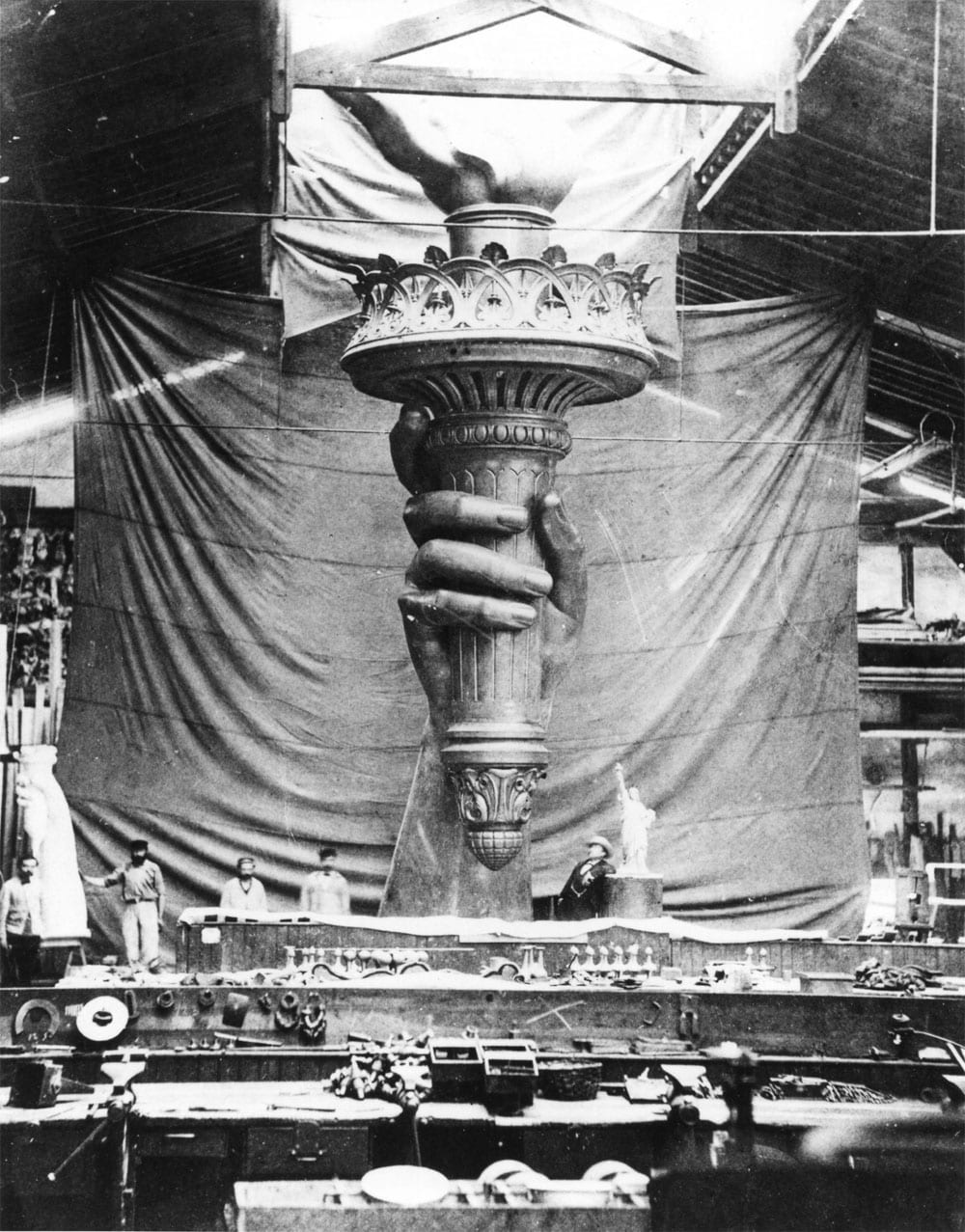
The statue was built in a large workshop in Paris. Key to the huge structure’s success was the involvement of Gustave Eiffel, who engineered
the interior metal framework that supports the statue.
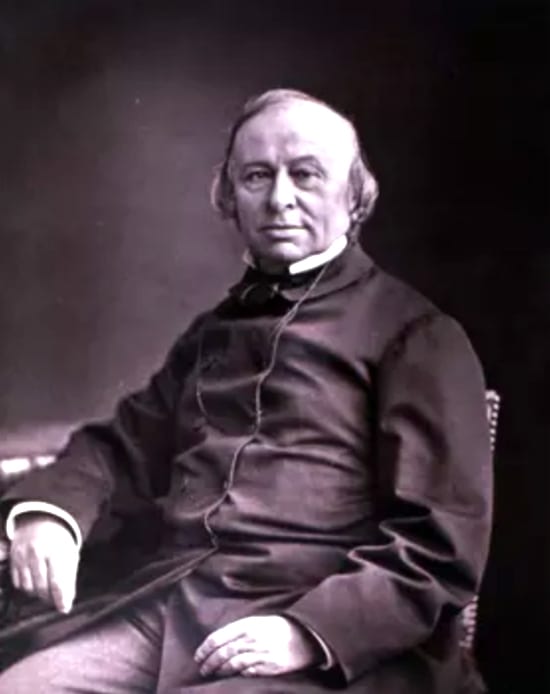
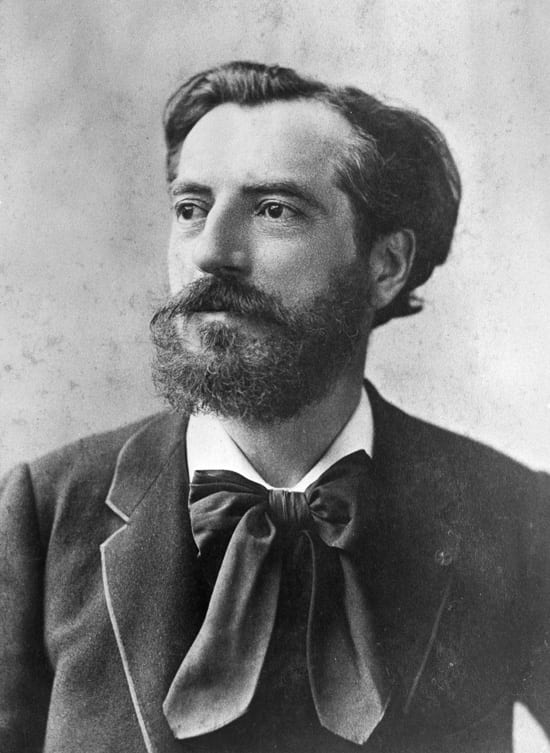
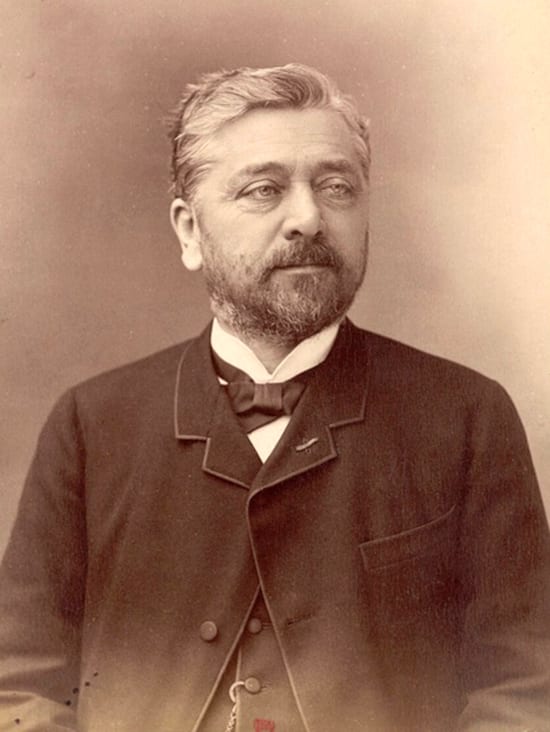
Édouard De Laboulaye Frédéric-Auguste Bartholdi Alexandre-Gustave Eiffel
Timing made a huge difference. Laboulaye, Bartholdi and their friends first made plans for this colossal gift to America in the late 1860s.
It took quite a long time to raise funds to construct the statue, transport it across the Atlantic, and install it in New York.
The fundraising was no small feat. In fact, in 1871 Bartholdi made a special trip to America to meet with potential donors, as well as President U. S. Grant, and to find a site in New York harbor where the statue would stand.
Fundraising was also going on in France, helped by a display of the head of the statue at the Paris World’s Fair of 1878. The French
government also sponsored a special lottery to raise funds.
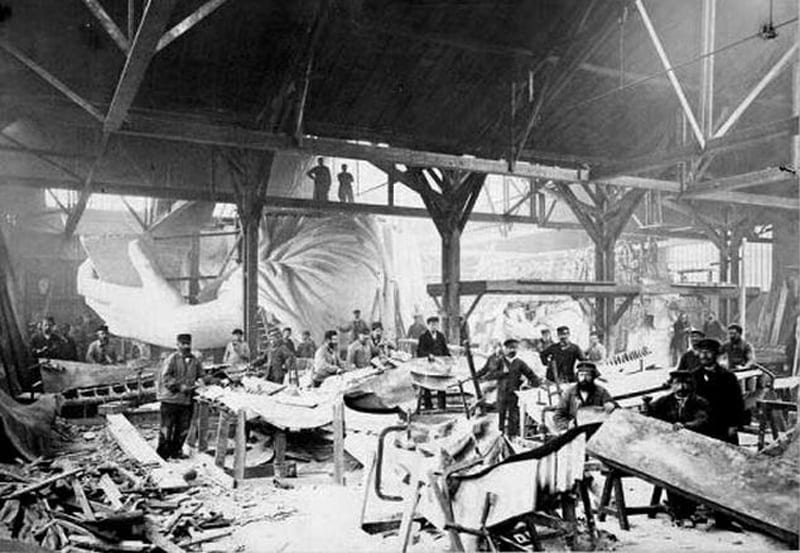
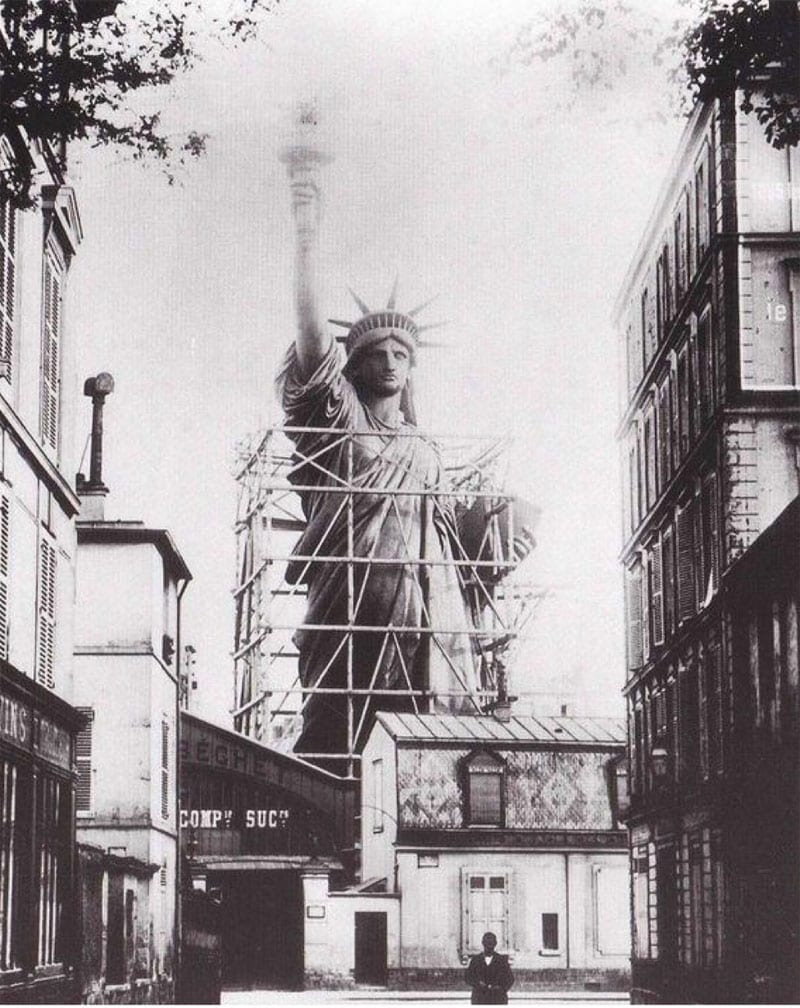
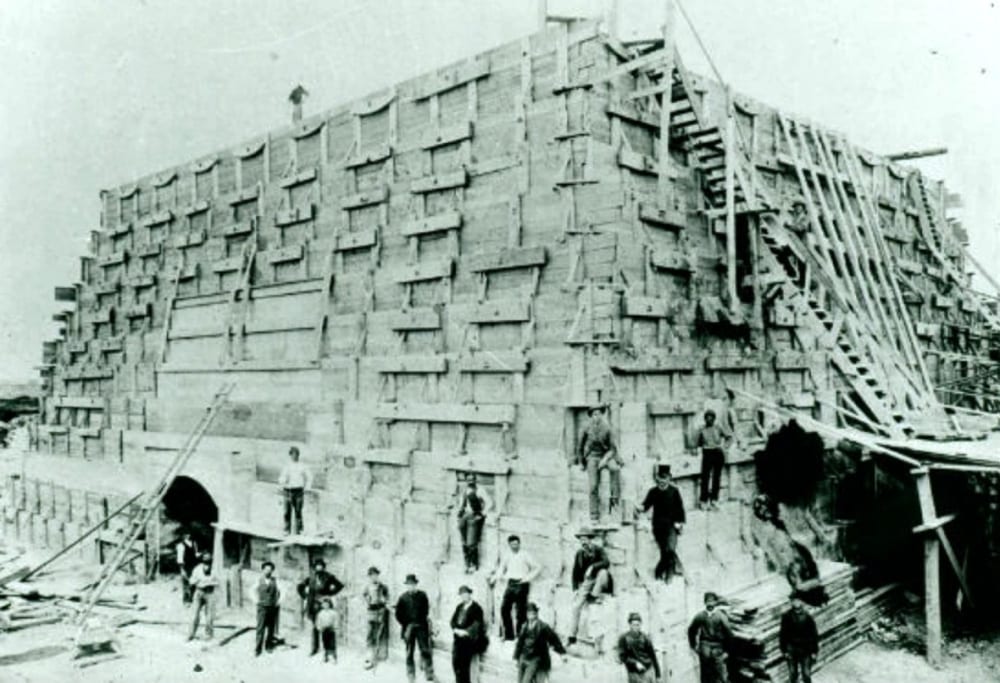
External area of the Gaget, Gauthier & Co. workshop in Paris, showing construction materials, the head of the Statue of Liberty, and a group of men gathered around parts of the statue, 1881-83. Wikimedia.
The statue under construction in Paris. View said to be from the Rue de Chazelles, in the 17th arrondissement by the workshop where the statue was being constructed. The disassembled statue was packed into 214 crates for shipment to New York, itself a monumental undertaking. Wikimedia.
Construction of the statue’s pedestal on Bedloe’s Island—with financial support from thousands of New Yorkers. National Park Service.
All the pieces finally came together—both literally and figuratively—in the early 1880s, right as a massive wave of immigration to
America, especially from Russia and from Eastern and Southern Europe, was beginning to hit our shores.
How did Emma Lazarus and her famous 1883 poem, The New Colossus, come into the picture? Lazarus was a Jewish New Yorker, born into a Sephardic family whose deep roots in New York City dated back to colonial times. The arts patron Constance Cary Harrison asked her to write a poem as part of a fundraising campaign for the statue’s pedestal—Americans were expected to pay for that critical part of the project.
“Regarding the Statue of Liberty, Pulitzer had his own, deeply personal agenda. He had marketed The World as the newspaper of the masses, and he was interested in shaming wealthy New Yorkers who, ‘would expend thousands on a foreign singer or ballet dancer and pour out their money lavishly in aping aristocratic follies.’ . . .
“Pulitzer felt that the Statue ‘is not a gift from the millionaires of France to the millionaire of America, but a gift of the whole people of France to the whole people of America.’ His appeal to the civic responsibility of the working class and his disparagement of the wealthy was displayed in a very simple fundraising technique. . . .
“Everyone who donated would see their name printed on the front page of The World. … Thanks to Pulitzer, by the fall of 1885 over 120,000 people had donated over $100,000 and work would finally be completed on the Statue of Liberty’s pedestal.”
-- “Pulitzer- In Depth,” U.S. National Park Service
Lazarus read her poem at the fundraising event, but it attracted little attention and was largely forgotten. 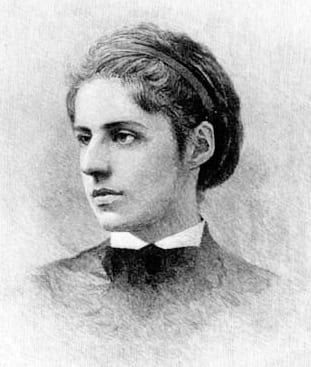
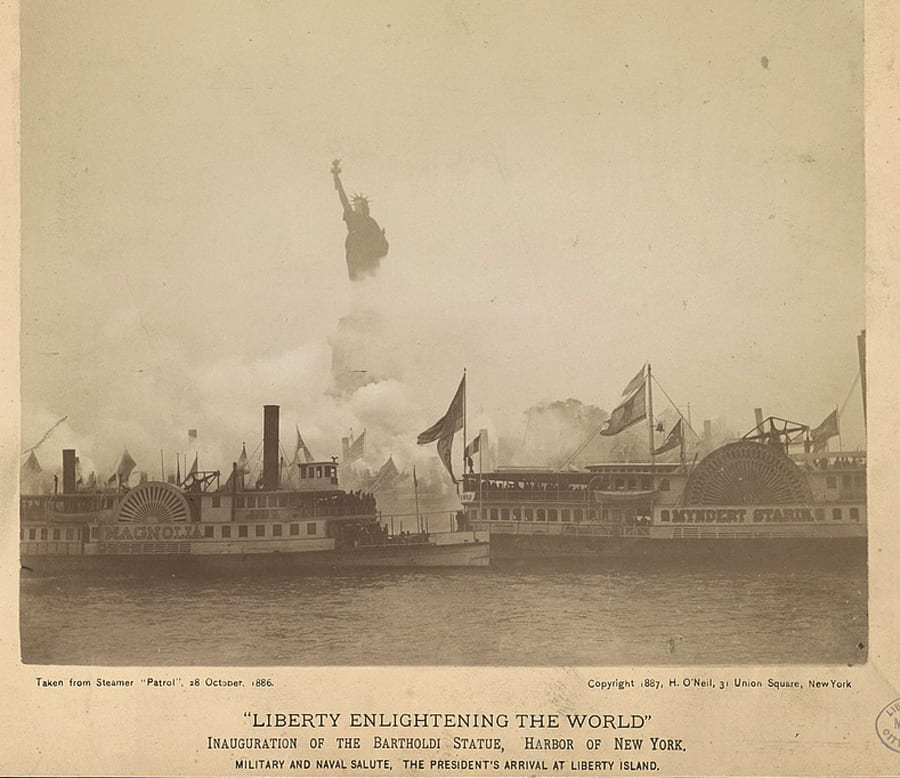
The Statue of Liberty was formally dedicated on October 28, 1886, by President Grover Cleveland. Among the thousands jamming Bledsoe (now Liberty) Island were Bartholdi himself as well as the newspaper magnate Joseph Pulitzer, whose New York World had run a large fundraising effort.
Tens of thousands viewed the statue’s dedication from boats in New York Harbor, while contemporary estimates claimed that nearly a million people watched a celebratory parade, the nation’s first-ever “tickertape” parade, through Manhattan. But according to historian Theresa DeCicco-Dizon, “of the more than 2,000 attendees to the formal dedication on Bedloe’s Island (later renamed Liberty Island), only two women* were invited.” See “Revisiting the Statue of Liberty’s 1886 Dedication.”
(The two women were Bartholdi’s wife and the unnamed granddaughter of Ferdinand de Lesseps, who had been the driving force behind construction of the Suez Canal and who headed the French delegation to the Statue of Liberty’s dedication.)
Emma Lazarus died on November 19, 1887, at the age of 38, only a year after the Statue’s dedication. Her poem was neither read nor mentioned
during the dedication, and it was not affixed to a bronze plaque inside the monument until 1903, as the result of efforts by the composer
(and great-granddaughter of Alexander Hamilton) Georgiana Schuyler to have the
poem recognized.
Lazarus’s interpretation of the meaning of the Lady of the Harbor gradually took hold, as more and more immigrants passed the beckoning s
tatue.
“The New Colossus,” by Emma Lazarus
Not like the brazen giant of Greek fame,
With conquering limbs astride from land to land;
Here at our sea-washed, sunset gates shall stand
A mighty woman with a torch, whose flame
Is the imprisoned lightning, and her name
Mother of Exiles. From her beacon-hand
Glows world-wide welcome; her mild eyes command
The air-bridged harbor that twin cities frame.
“Keep, ancient lands, your storied pomp!” cries she
With silent lips. “Give me your tired, your poor,
Your huddled masses yearning to breathe free,
The wretched refuse of your teeming shore.
Send these, the homeless, tempest-tost to me,
I lift my lamp beside the golden door!”
 Bartholdi’s
and Laboulaye’s original emphasis on Franco-American friendship and gratitude for the abolition of slavery came to be supplanted—at least
in part—by the vision of the statue as a beacon of hope to millions of immigrants, “your tired, your poor, your huddled masses yearning to
breathe free.” But the statue’s enduring power as a symbol of freedom has remained constant from Bartholdi’s first plans for the monument
through today.
Bartholdi’s
and Laboulaye’s original emphasis on Franco-American friendship and gratitude for the abolition of slavery came to be supplanted—at least
in part—by the vision of the statue as a beacon of hope to millions of immigrants, “your tired, your poor, your huddled masses yearning to
breathe free.” But the statue’s enduring power as a symbol of freedom has remained constant from Bartholdi’s first plans for the monument
through today.
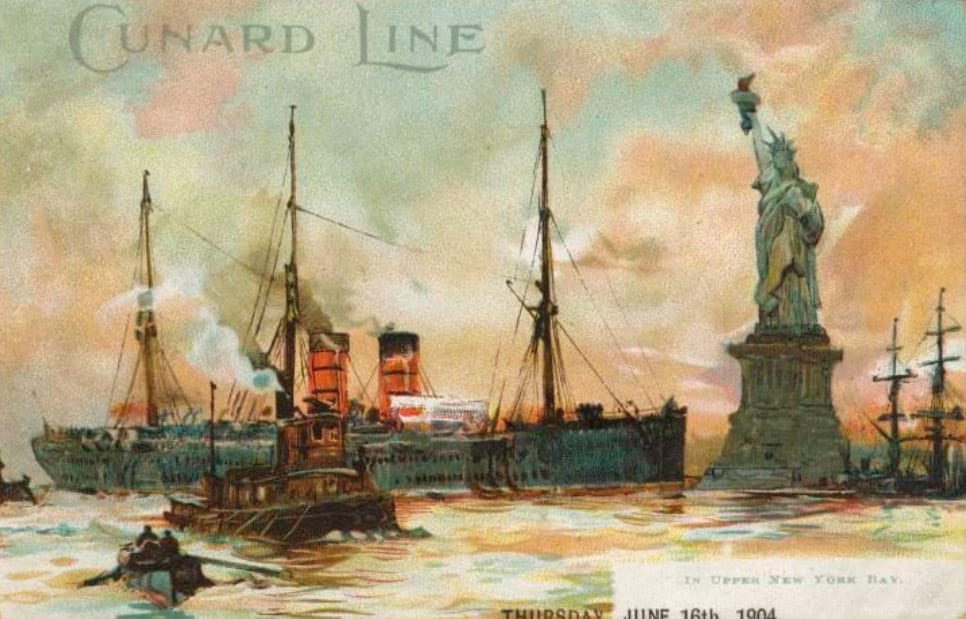
Left: 1904 postcard image “Upper New York Bay.”
New York Public Library Digital Collections.
A few final notes.
First, I found it interesting to learn that suffragists objected to the use of a female statue as a symbol of liberty when real women in the U.S. didn’t have the right to vote.
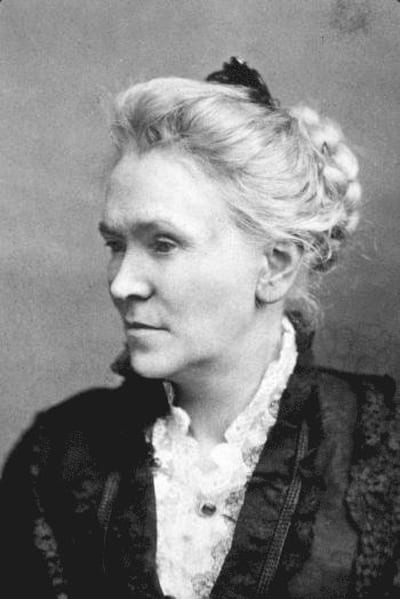
“It is the sarcasm of the 19th century to represent liberty as a woman, while not one single woman throughout the length and breadth of the land is as yet in possession of political liberty,’ remarked Matilda Joslyn Gage of the suffragists who protested the unveiling event.” —Becky Little, “The Statue of Liberty Has Long Been a Magnet for Protest.” (Gage is shown at right.)
Similarly, “Racism and discrimination towards African Americans did not end after the Civil War or with the dedication of the Statue—it continued on for more than a century. … Instead of representing freedom and justice for all, the Statue emphasized the bitter ironies of America’s professed identity as a just and free society for all people regardless of race. From the time of the Statue’s dedication, attitudes towards the Statue in the African American community were ambivalent and uncertain.” National Park Service
Second, over time, editorial cartoonists in newspapers and magazines have depicted the Statue of Liberty in changing ways. Needless to say, she’s been a very elastic figure.
Here are just a few cartoons making use of the Statue of Liberty: #1 (more than a dozen) / #2 “She was getting heavy. Sad.” / #3 “Migrant Detention Center: She was coming from a different country, Doesn’t have her papers ...”
With America’s 250th birthday on July 4th, the image of the Statue of Liberty seems to be everywhere. I hope this post can remind us just
how significant the gift of Lady Liberty to America has shown itself to be—thanks to an idea advocated for and executed in large part by
Colmar, France’s, native son, Frédéric-Auguste Bartholdi.
To read the next post, "The Emotional Power of Painted Wood Sculptures," click here.
To see a list of all the posts in the Learning from Alsace-Lorraine series, click here.
© 2026 Wayne Senville. Text, photographs, and original graphics, except where otherwise credited. Published by the Alliance Française of the Lake Champlain Region with permission of the author.

Leave a Comment