The Musée Unterlinden in Colmar surprised me. I thought Lila and I would quickly walk through its large galleries of religious art—for which
the museum is well-known—and spend most of our time in its smaller galleries devoted to contemporary art.
Let me acknowledge up front that I've never cared much for medieval religious paintings, given their overwhelming focus on biblical themes.
But when I saw the painted wood sculptures at the Unterlinden, I was struck by how much emotional power they possessed, especially when
viewed close up.
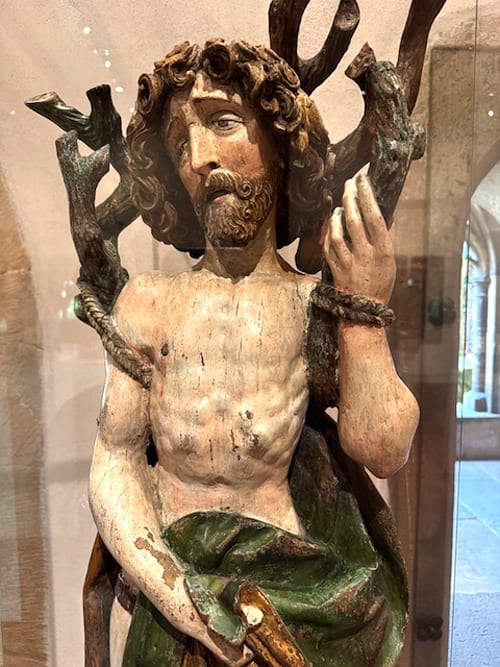
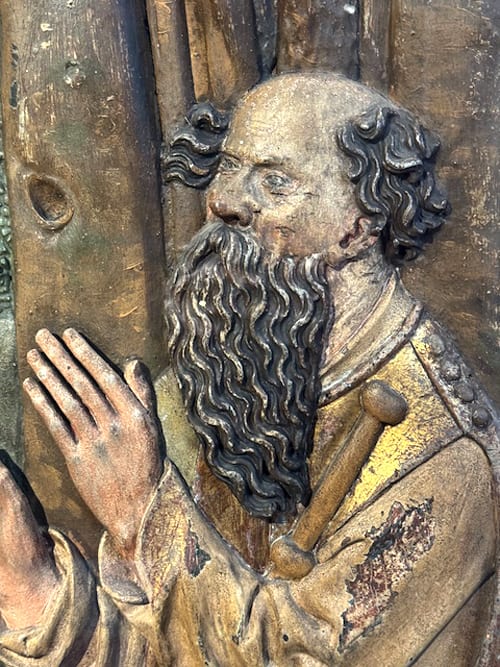
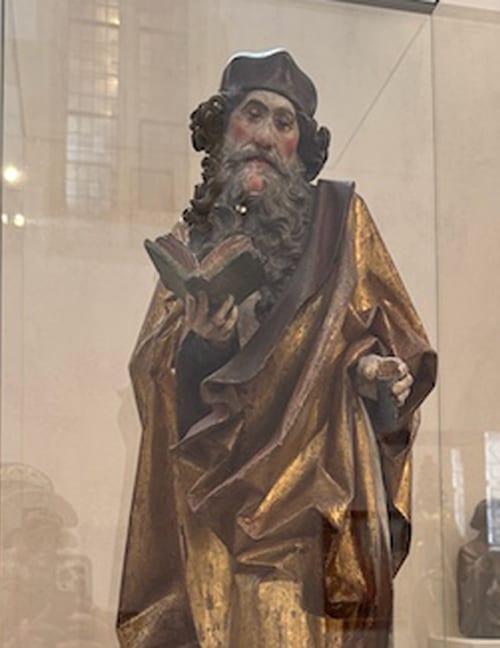
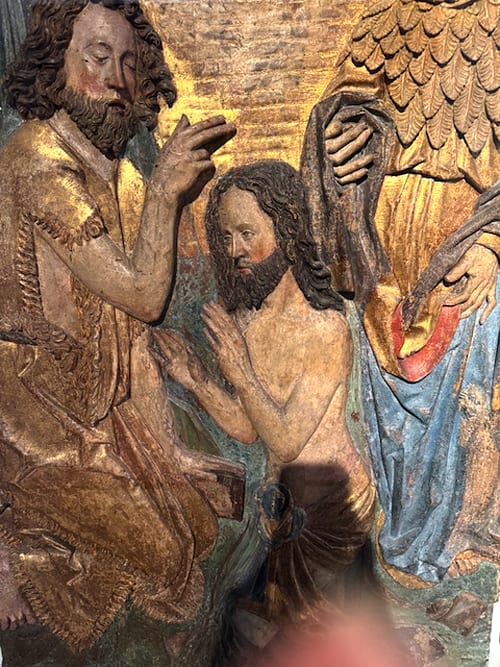
After returning home, I spent a couple of hours online tryin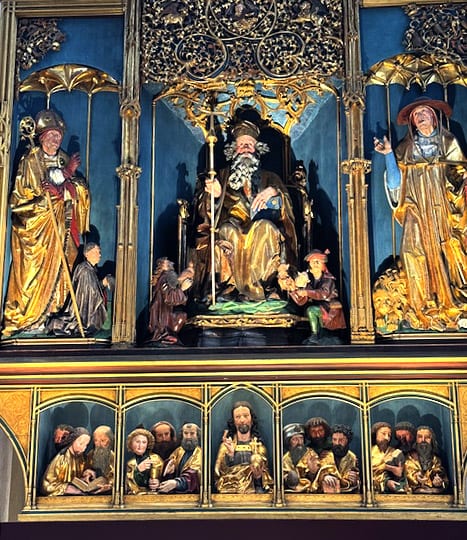 g
to learn more about the type of painted wood sculptures we saw in the galleries of the Unterlinden Museum.
g
to learn more about the type of painted wood sculptures we saw in the galleries of the Unterlinden Museum.
The best introduction I found to this kind of wood sculpture was from a Smith College Museum of Art exhibition titled “Brought to Life: Painted Wood Sculpture from Europe, 1300–1700.”
Here’s an excerpt from the exhibition’s description: “Polychrome (multicolored) wood sculptures are today recognized as art objects, but at the time they were made, viewers interacted with the sculptures as if they were alive. Most of the works on view here represent sacred figures from Christianity, and their lifelike appearance was central to their function as objects of prayer and devotion. Whether located in a church or a home, the sculptures were part of a multisensory experience.
They were often dimly lit by candlelight. Worshippers would have touched, held or kissed them. . . . Wood also had religious meaning, symbolizing humility and regeneration.”
The only problem in viewing the wood sculptures at the Unterlinden Museum: we spent so much time looking at them that we ran out of time to do more than race through the gallery devoted to modern art!
A portion of the Issenheim Altarpiece, carved
from wood and painted in polychrome. You can get close up views
of this remarkable work painted by Matthias Grünewald
and sculpted by Nicolas de Haguenau between 1512 and 1516
on
the museum’s website.
All photos by the author.
To read the next post, "The Nazis' Struthof Concentration Camp," click here.
To see a list of all the posts in the Learning from Alsace-Lorraine series, click here.
© 2026 Wayne Senville. Text, photographs, and original graphics, except where otherwise credited. Published by the Alliance Française of the Lake Champlain Region with permission of the author.
Leave a Comment