For decades, city planners have talked about making cities more pedestrian friendly. Strasbourg shows what that idea can look like when taken very seriously.
While many North American cities, led by Montreal and Portland, Oregon, have been moving towards this goal, a number of European cities, like Strasbourg, seem to be many kilometers ahead.
One method of making cities more pedestrian and bike friendly that has grown in popularity in Europe, especially in cities with large historic districts, is restricting the access of vehicles in designated areas.
I first saw this system when in Montpellier, France, about ten years ago. Retractable bollards (which can be raised and lowered) are used to
block cars and trucks from entering, with specific exceptions.
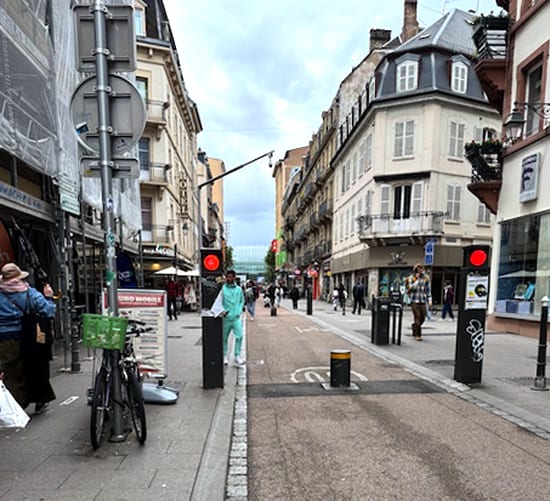
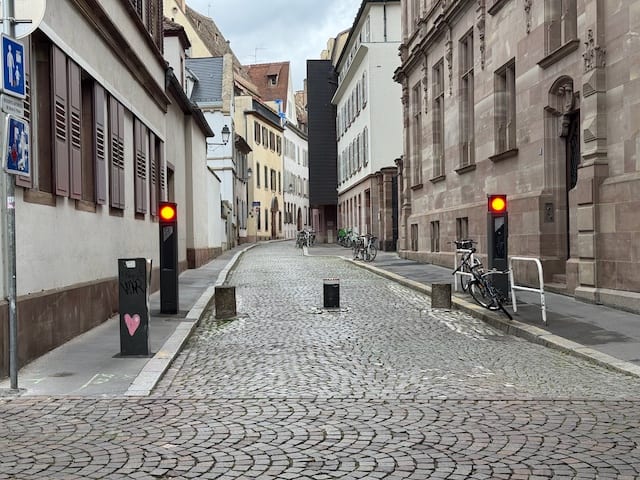
In Strasbourg (as elsewhere) exceptions are carved out for local residents; for deliveries (especially in the early morning); and for essential services like trash collection and access by maintenance contractors.
The bollards are retractable by using a code, card, remote control, or an intercom to call for assistance.
Strasbourg’s aim is to have fewer cars in its historic core, resulting in less noise, reduced exhaust fumes, less need for parking spaces, and a calmer environment where people can enjoy each other’s company and their cappuccinos outdoors. Vehicular access is not totally closed, and parking remains available for people who live within the controlled area.
Restricting vehicle access to the city’s historic center is far easier when people have attractive alternatives.
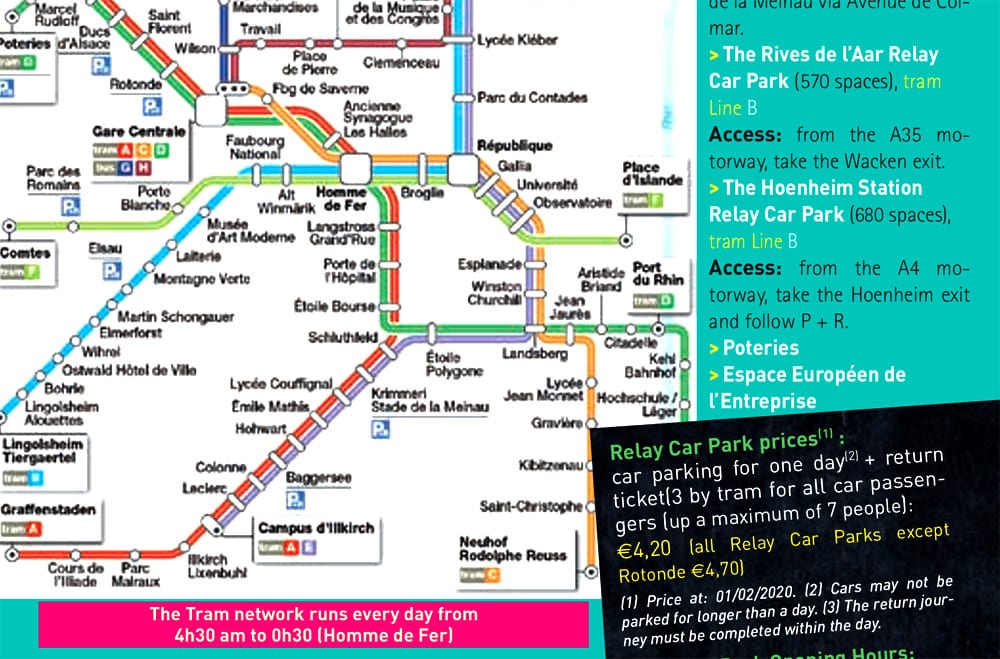
Strasbourg’s extensive tram network, with its multiple lines and numerous stops, enables visitors to park on the periphery, near the tram
system, to easily access the centre ville. See this Strasbourg
tram guide.
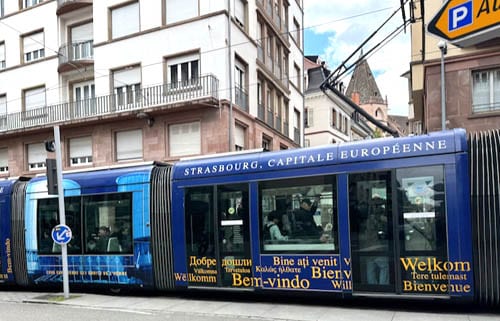
I’m not aware of any North American city that does anything comparable to Strasbourg in terms of controlling vehicular access to its center, while offering easy transit, bicycle, and pedestrian access alternatives.
In France, cities can determine in which parts of their city to control vehicle access—and to what extent.
Strasbourg has applied two principal zones to streets in different parts of its historic core:
This is the strictest category. Cars are generally prohibited or heavily restricted. Deliveries and service vehicles are typically permitted only during specified hours. Bicyclists must yield to pedestrians and cycle slowly or walk their bikes. Many of Strasbourg’s cathedral and shopping streets fall into this category.
This is a middle ground. Cars may enter, but only at very low speeds, and they must yield to pedestrians. These streets often serve as transition areas around the pedestrian core.
This map shows the central core of Strasbourg, la Grande Île, and its encirclment by a canal and branches of the Ill River.
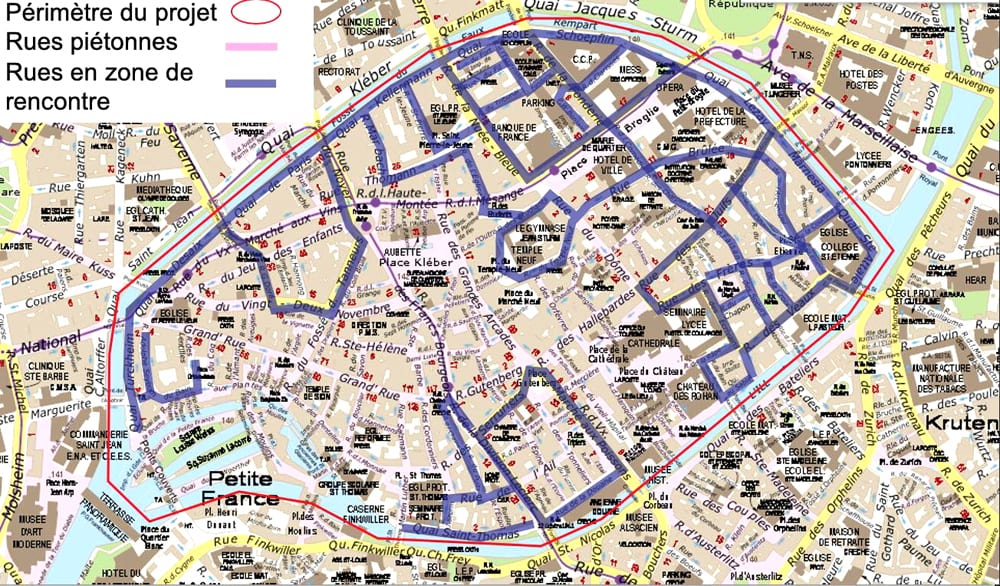
The dark purple indicates streets in the zone de rencontre, while the light purple color indicates the many streets and places
designated as rues piétonnes. Any of you wanting a slightly deeper dive may visit these links the Zone
piétonne and Zone de rencontre.
 Above:
Essential services, like this delivery of beer,
Above:
Essential services, like this delivery of beer,
are allowed in Strasbourg’s pedestrian zones
during morning hours.
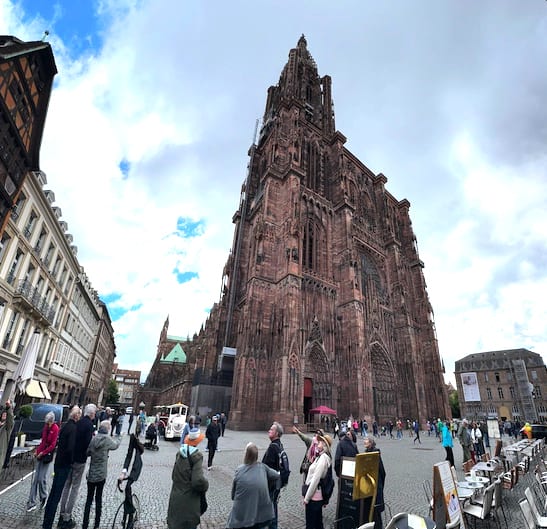
Right: Strasbourg’s cathedral is located within a pedestrian zone. The tourist mini-train—just visible left of the cathedral—is also allowed access.
Here’s an excerpt of what the Eurometropolis of Strasbourg has posted on its website about their system (translated from French):
“Bicycle & Pedestrian Traffic. The facilities for pedestrians and cyclists give the city of Strasbourg an incomparable charm, much appreciated by tourists but also by locals. To avoid ‘wild and anarchic’ parking, it was necessary to find solutions to filter the cars, to prevent them from reaching certain protected areas without penalizing the residents too much. The Eurometropolis of Strasbourg has a centralized management of access controls based on retractable bollards.”
Francophones, you can read the full explanation in French for yourself here.
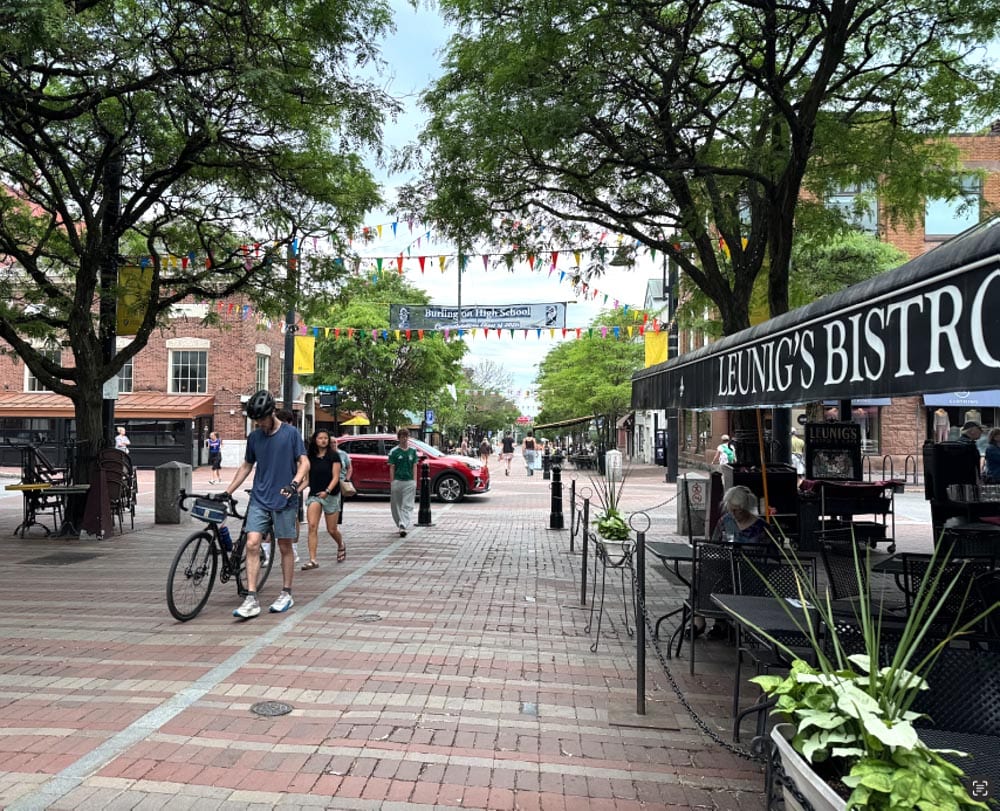
The photo below is about as close as we come in America to restricting vehicular access in our downtowns. On Burlington, Vermont’s,
four-block-long Church Street Marketplace, cars are not allowed except on
cross-streets. Boulder, Colorado, has a similar downtown pedestrian mall.
A portion of Church Street
in downtown Burlington, Vermont, on a Sunday morning
before most stores and restaurants have opened.
All photos by the author.
To read the next post, "From When Is This Castle?," click here.
To see a list of all the posts in the Learning from Alsace-Lorraine series, click here.
© 2026 Wayne Senville. Text, photographs, and original graphics, except where otherwise credited. Published by the Alliance Française of the Lake Champlain Region with permission of the author.

Leave a Comment