A mere two-hour drive from Burlington, the Hyde Collection in Glens Falls, New York, should be on everyone’s “must see” list this
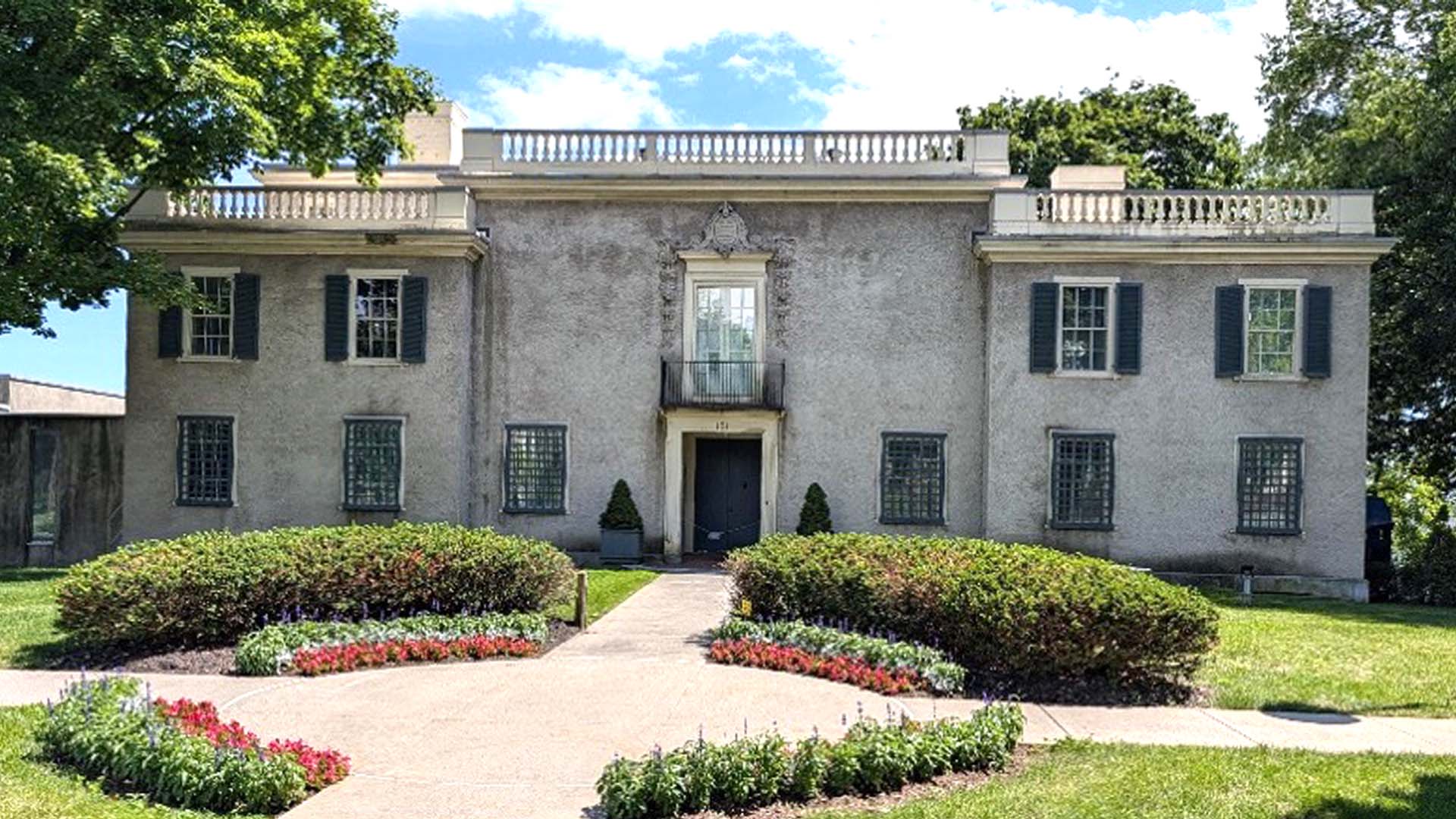
summer. The Hyde house was the home of Glens Falls native Charlotte Pruyn and her husband Louis Fiske Hyde. Finished in 1912, the
stately Italian Renaissance Revival home still overlooks the paper mill, the source of the family’s wealth, co-founded in the 1860s by
Charlotte’s father Samuel Pruyn.
Like other members of the well-to-do, the Hydes often traveled to Europe, and they also had an apartment in New York City where they
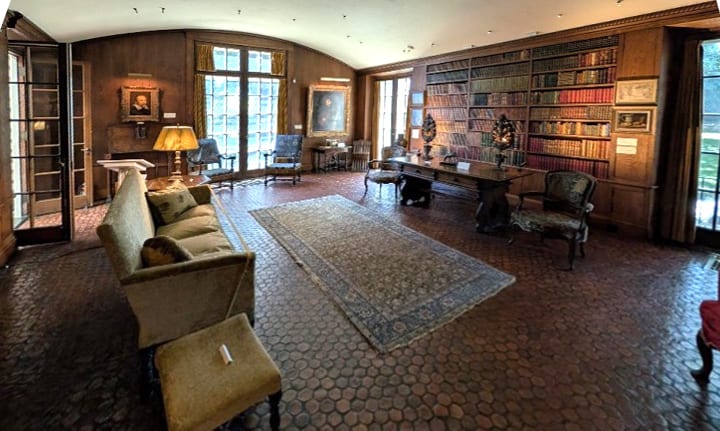
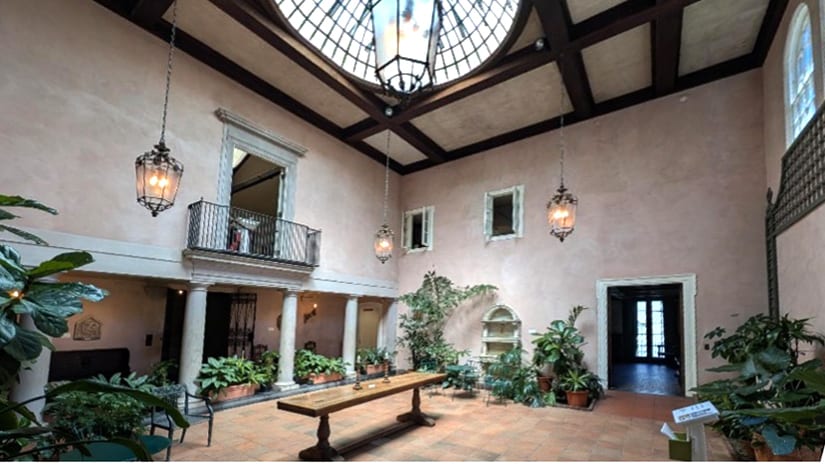
became acquainted with the city’s art galleries and dealers. This enabled them to amass an extraordinary collection of art,
including works by El Greco, Rembrandt, Renoir, and Picasso, to name but a few. In 1963, soon after Charlotte’s death, the Hyde
Collection became a public museum which has since expanded its collection and physical space.
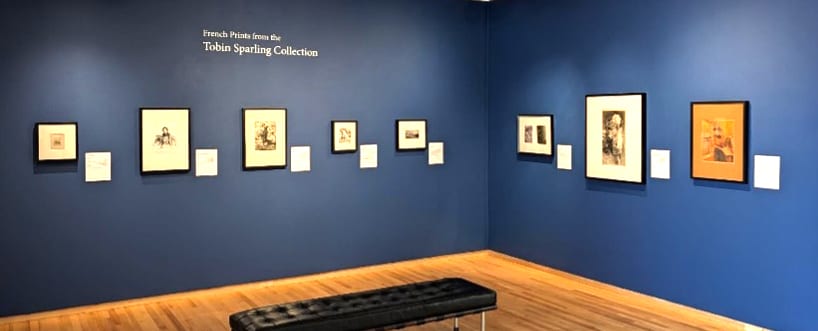
The Hyde Collection presents several special exhibitions every year, and one of them, on view in the Hoopes Gallery until July 26, is an
illuminating show of more than twenty newly acquired French prints from the collection of Tobin Sparling. Although filling just one
gallery, the exhibition features works that exemplify the evolution of French art from Romanticism in the early 19th century to
Cubism in the early 20th century.
.
The very informative labels discuss the prints’ subject matter as well as the artistic styles in question, placing the works in their
broader art historical and socio-historical context. The text is educational without being too long or preachy—a balance that is
rarely achieved!
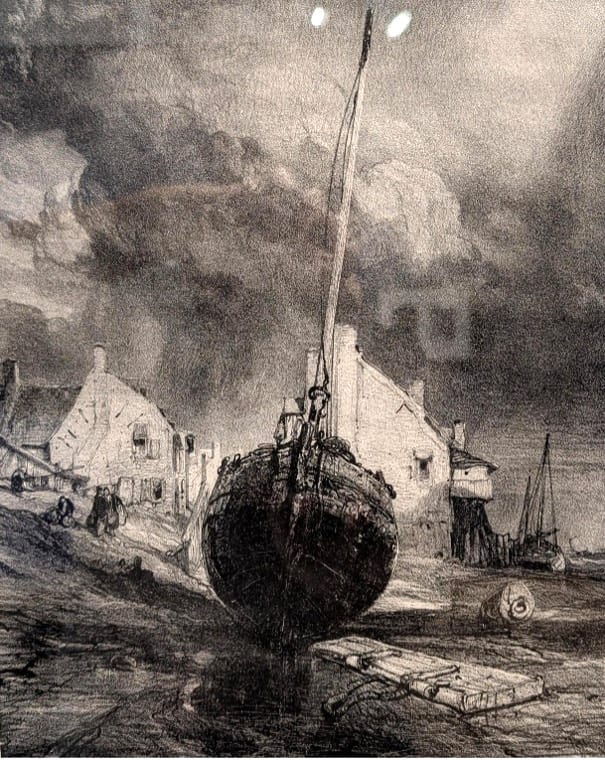
This lithograph by Eugene Isabey, at the beginning of the exhibition, is a prime example of Romanticism, with its emphasis on mood and
emotion, highlighted by dramatic lighting and contrasts of light and shadow.
Eugene Isabey, Memory of Saint-Valery-sur Somme, 1833
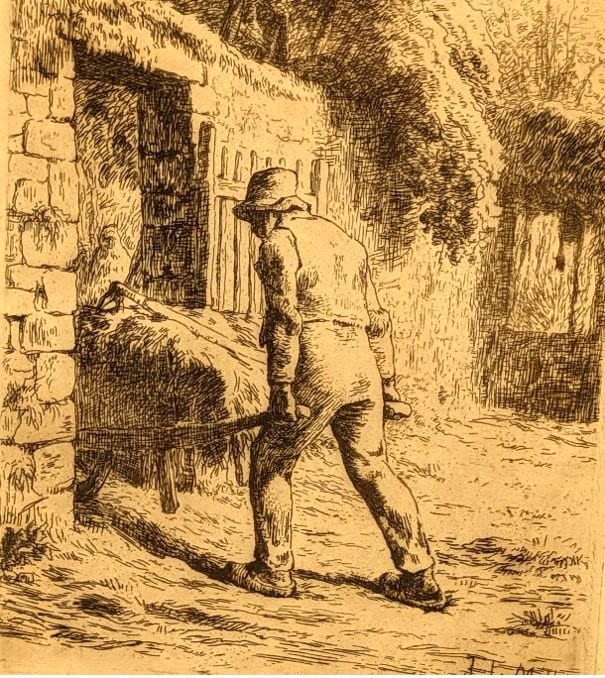
By contrast, the etching by Jean-Francois Millet of peasants at work reveals a different interest: one focused on the everyday life of villagers and farmers.
At a time of increasing social tensions, Realist artists such as Millet placed peasants at the forefront of their oeuvre and raised
the consciousness of Parisian gallery and museum visitors.
Jean-Francois Millet, The Peasants Returning from the Manure Heap, 1855
For many, Édouard Manet is the founder of modern art, and his radical paintings, such as the famous Dejeuner sur l’Herbe from 1862
and now in the Musee d’Orsay in Paris, embodies his unorthodox subject matter and painting technique.
His matter-of-fact depictions of Parisians at leisure encouraged younger artists, such as the Impressionists, to focus on the world with which they were familiar.
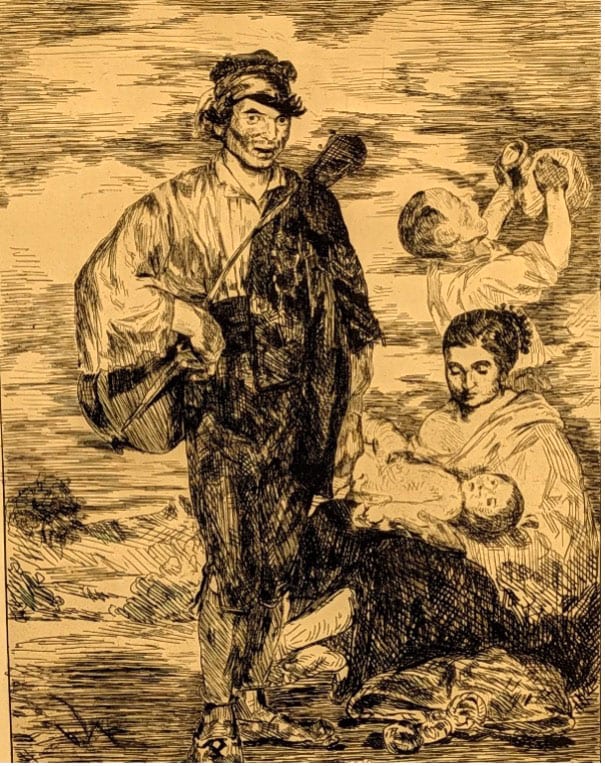
This etching from 1862 underlines Manet’s embrace of unconventional subject matter, in this case a family of itinerant gypsies (gitans) who were seen as outcasts in French society.
Edouard Manet, The Gypsies, 1862
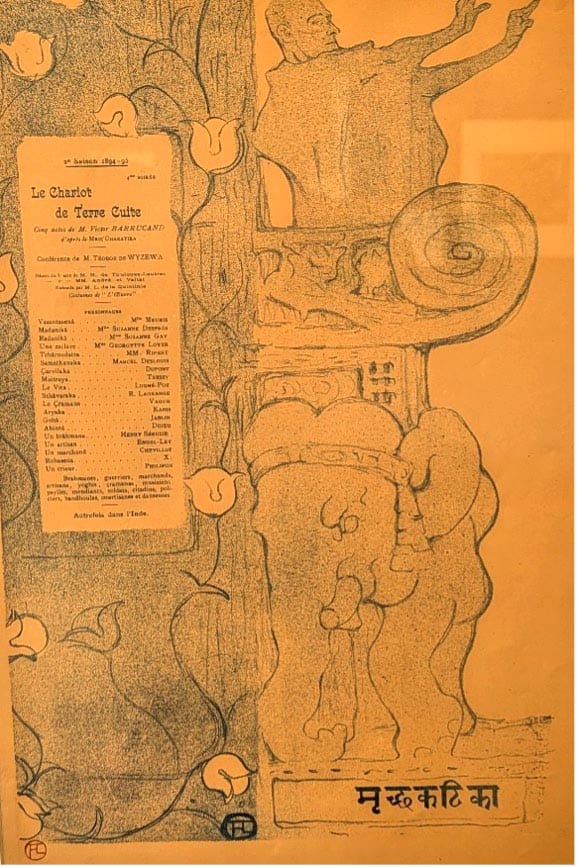
If you are observant (and have sharp eyes!), you will have noticed the telltale signature of an intertwined H, T, and L at the lower left of this lithograph: the mark of none other than Henri de Toulouse-Lautrec.
As is well known, Toulouse-Lautrec produced many posters for the Moulin Rouge and other cabarets in Paris.
This program for Le Chariot de terre cuite references the play’s 4th-century Sanskrit love story by having the title written in Sanskrit at the lower right-hand corner while the elephants refer to the play’s exotic locale.
The playbill betrays Toulouse-Lautrec’s characteristic style featuring flattened forms and bold outlines.
Henri de Toulouse-Lautrec, Program for “The Little Clay Cart” (Le Chariot de terre cuite), 1895
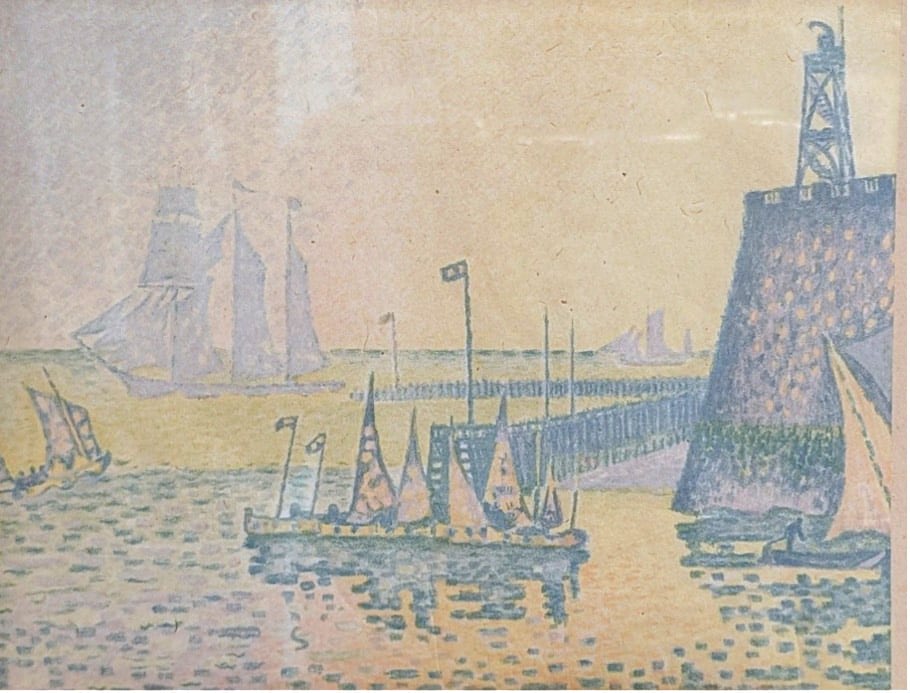
By the 1880s, artists known as Post-Impressionists, such as George Seurat and Paul Signac, became interested in exploring optics in painting. Seurat’s Sunday Afternoon on the Island of La Grande Jatte from 1884 at the Art Institute of Chicago, is a famous example of this new trend.
Instead of mixing their colors on the palette, they applied the paint in hundreds of individual dots or points on the canvas itself, letting the viewer’s eye mix the color dots in their mind.
This technique became known as Divisionism or Pointillism, and this color lithograph by Signac is a perfect example of this new interest in color theory.
Paul Signac, Evening, 1898
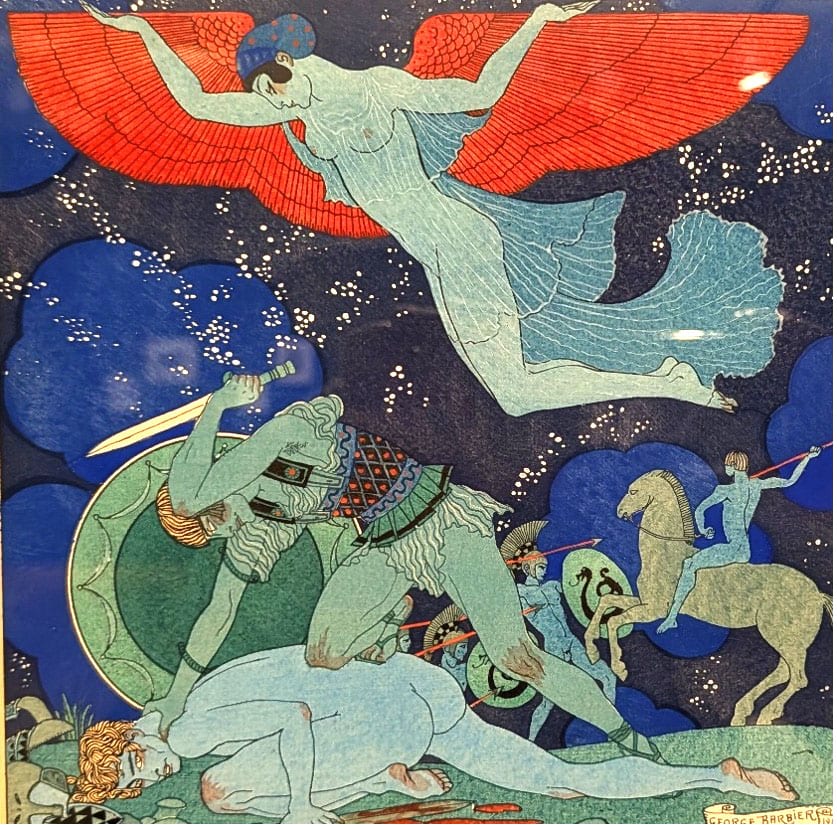
Georges Barbier’s colorful print is a prime example of Art Nouveau in the early twentieth century, with its florid composition and emphasis on curved lines and patterns derived from nature.
Hector Guimard’s famous Paris Metro entrances, with their elongated vegetal motifs, are another example of Art Nouveau.
Georges Barbier, Angel of Mercy, 1918
Through some two dozen choice examples, the Hyde Collection’s French prints testify to the artistic innovations that defined 19th-century
France, and they also allow us to appreciate an often-neglected aspect of an artist’s oeuvre, since prints often play second fiddle to
paintings.
A visit to the Hyde Collection in Glens Falls reminds us of the myriad opportunities to view first-class art in the Lake Champlain region
and the North Country.
French Prints from the Tobin Sparling Collection is on view till July 26. For information, visit the Hyde Collection website, here.
Note: All photographs in the review were taken by the author and the prints mentioned in the review are in the Hyde Collection. I have also used information made available on labels in the exhibition and in the museum.
Leave a Comment