The Common European Framework of Reference for Languages (CEFR) is an international standard for working out a person's ability within a language. It was established by the Council of Europe and aims to validate language ability.
The six levels within the CEFR are A1, A2, B1, B2, C1,and C2. With these levels, you can easily work out your ability in around 40 different languages.
The levels are often used casually by language learners to explain their ability at speaking, reading, writing, and understanding a language. But there are also exams and certificates available to those who want to make their level official.
Let’s take a look at what the different levels are and what language learners can typically do at each level.
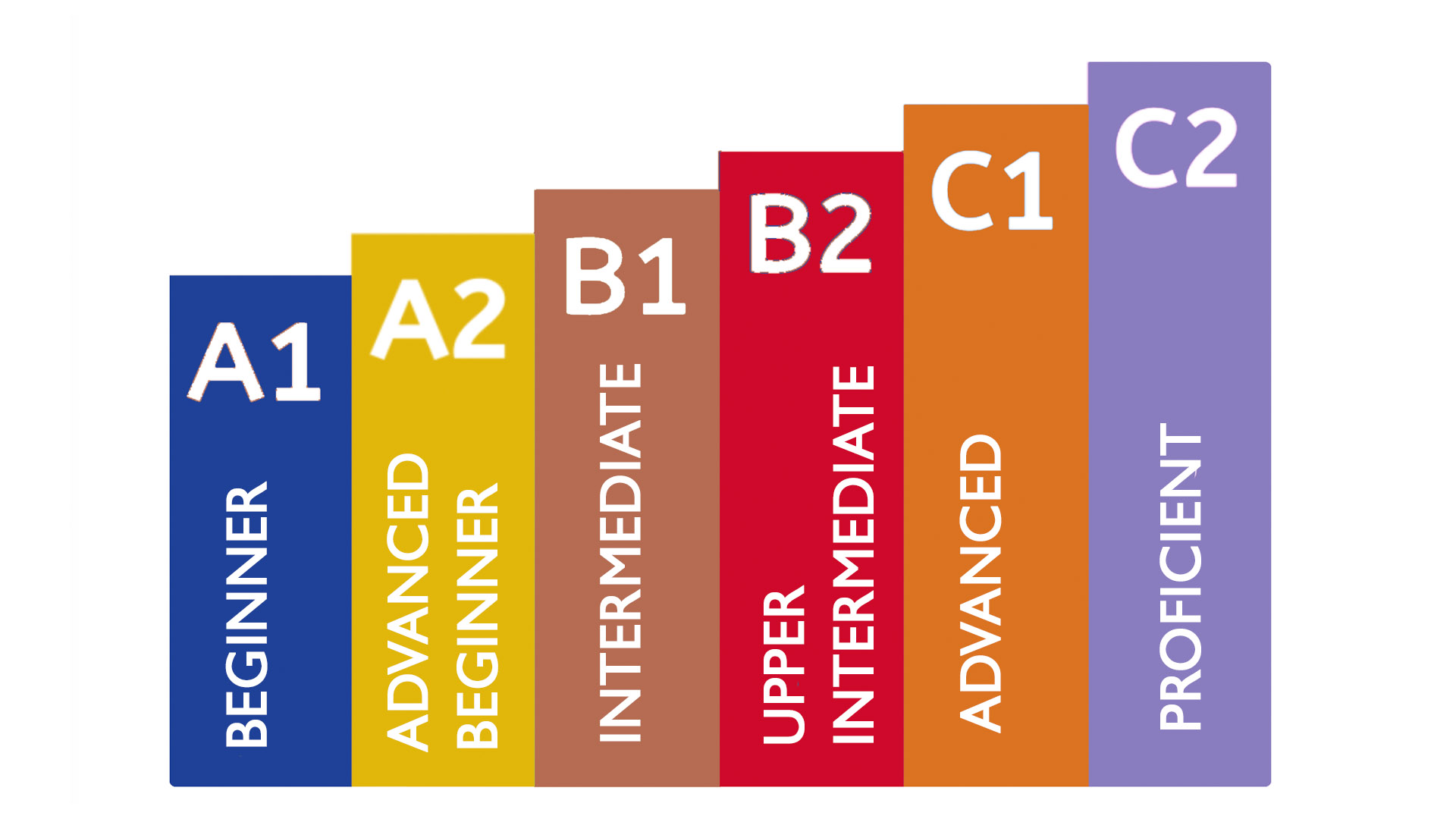
At the A1 level, a language learner can:
At the A2 level, a language learner can:
At the B1 level, a language learner can:
At the B2 level, a language learner can:
At the C1 level, a language learner can:
At the C2 level, a language learner can: